


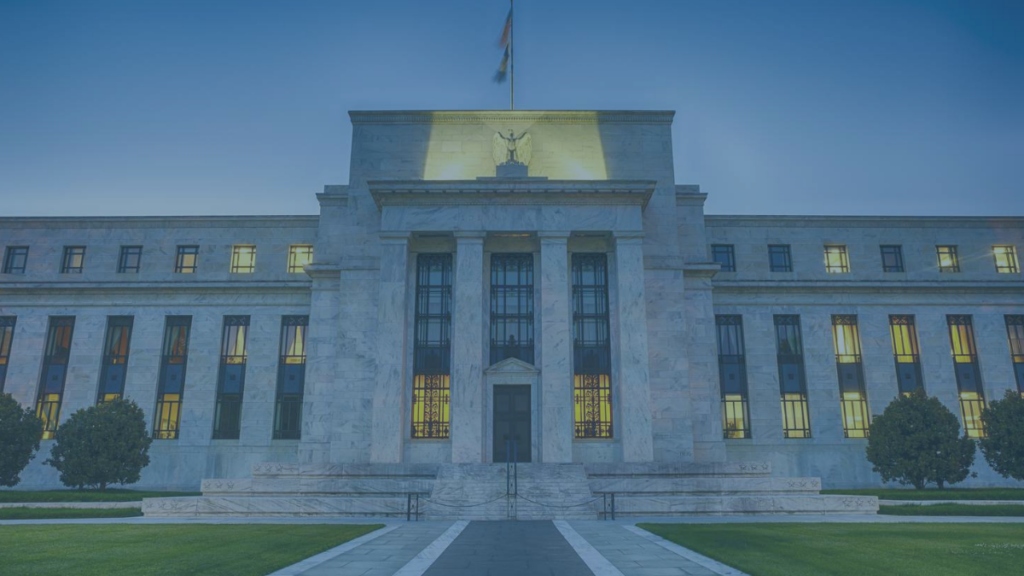
Warsh Takes the Reins: A Sharper, More Focused Fed
Kevin Warsh officially stepped into his role as Federal Reserve Chair on May 22. Presiding over his very first FOMC meeting and subsequent press conference, Chair Warsh signaled an immediate structural shift from prior leadership, prioritizing operational adjustments over sudden interest-rate modifications.
A “Less is More” Communication Strategy:
- Drastic Statement Trim: The June FOMC statement contained just 147 words, down drastically from the five-year average of roughly 380 words under former Chair Jerome Powell.
- End of Forward Guidance: Open-ended projections and future policy hints have been effectively eliminated. Warsh firmly deflected forward-looking policy queries at his press conference, quoting the late former Treasury Secretary George Shultz: “Press conferences are useful, but be sure you have something to say.”
- Stepping Away from the “Dots”: While the 19-member Summary of Economic Projections (SEP) will continue, Chair Warsh announced he will personally no longer contribute to the individual “dot plot” forecasts.
Markets are expected to undergo an adjustment period as they adapt to trading purely on incoming macroeconomic data rather than Fed management, likely introducing fresh short-term volatility.
This Committee Will Deliver Price Stability
Striking a deeply hawkish and confident tone, Chair Warsh reassured the public that the central bank remains fiercely committed to its inflation mandate, declaring, “This Committee will deliver price stability.”
Key Economic Observations:
- Uneven System Liquidity: Banking system reserves remain ample but are flowing in an uneven fashion.
- Real Estate Hardship: High mortgage rates continue to act as a highly restrictive weight on housing market activity and affordability.
- Hardware Resilience: On a brighter note, corporate capital expenditure (capex) and macro productivity gains remain fundamentally solid.
Market Impact: Because several FOMC members penciled rate hikes into the updated dot plots, fixed income markets aggressively pulled forward expectations for the next rate hike from December to September. The 2-year Treasury yield surged sharply higher, while equity markets corrected downward on the news. Crucially, 5-year breakeven inflation yields collapsed, demonstrating that bond investors have deep confidence in Warsh’s hardline approach to cooling high prices.
Five Independent Task Forces Launched
In a bid to modernize central bank operations, Chair Warsh announced the formation of five independent task forces slated to begin delivering initial findings this autumn, targeting full completion by the end of 2026. The groups will thoroughly examine:
- Fed communications
- The Federal Reserve balance sheet
- Data source utilization and methodological enhancements
- Macro inflation frameworks
- Productivity and jobs, specifically analyzing the speed, economic reach, and institutional footprint of artificial intelligence
On the Shift to High-Frequency Data: Warsh strongly criticized the Fed’s traditional dependence on lagging, backward-looking metrics, stating a clear preference for timely, high-frequency data to guide modern policy.
Bumpy Road to Peace in the Middle East
Geopolitical developments remain highly volatile. The United States and Iran electronically executed a 14-point Memorandum of Understanding (MOU) to pause hostilities. Under the framework, U.S. Treasury Secretary Scott Bessent announced a temporary 60-day general license permitting Iranian oil sales alongside International Atomic Energy Agency (IAEA) inspections.
Supply Dynamics & Shipping Volatility:
- Strait of Hormuz Instability: While commercial transit briefly resumed as WTI crude plunged below $80 per barrel, Iran’s Revolutionary Guards rapidly declared the Strait closed again following a sharp rise in military conflict between Israel and Hezbollah in Lebanon.
- Gulf Re-openings: Despite localized escalations, global oil markets continue to signal long-term optimism that a final peace deal will materialize. Once finalized, Gulf producers are poised to flood the market: Saudi Arabia can achieve pre-war capacity in two weeks, Kuwait expects 80% restoration in one week, and the UAE is prepared to instantly utilize an operational bypass pipeline.
- Technical Targets: WTI Crude futures recently settled at $77.39. Technicians expect a further slide into the low $70s, with a potential test of the unfilled $67–$69 price gap. Meanwhile, the national retail gas average fell to $3.99, breaking below the $4.00 mark for the first time since March.
Valuations Improve Even With Higher Stock Prices
Despite major indices pushing to higher ground, equity valuations have actually grown much more reasonable. The S&P 500 forward price-to-earnings ($P/E$) ratio has eased to just under 22 times—marking a 3.3% decline relative to last year.
This healthy contraction is entirely driven by blockbuster corporate profitability; aggregate Wall Street earnings estimates for the next four quarters have surged an incredible 28% to 30% year-over-year.
This historic surge in corporate profitability highlights immense corporate pricing power, significant administrative efficiency upgrades, and robust macro productivity gains.
Sector Momentum and Technical Readings
According to our quantitative momentum models, Information Technology remains firmly entrenched in first place, followed by Industrials and Communication Services.
Extreme Technical Disconnections
Our short-term 13-week normalized oscillator features an extraordinarily rare layout:
- Extremely Overbought: Information Technology is sitting completely isolated at an extreme value of 2.0058.
- Deeply Oversold: Energy (-2.3782), Consumer Staples (-1.8978), Healthcare (-1.8546), and Utilities (-1.6946) have all entered deeply washed-out territory.
- Near Oversold: Every single remaining sector in the S&P 500 is currently categorized as near oversold.
This extreme imbalance leaves technology highly exposed to a sudden, painful correction, while setting the stage for a violent, massive summer sector rotation into long-ignored value spaces. Notably, Energy fell out of the top three spots for the first time in 28 weeks, while Financials vacated the bottom tier for the first time in 19 weeks, signaling a clear structural bottom.
Looking Ahead: Inflation Gauges and AI Hardware
The upcoming corporate and macroeconomic calendar contains pivotal triggers for the summer season:
- The Core PCE Showdown: On Thursday, the Bureau of Economic Analysis will release May Personal Consumption Expenditures (PCE) data. As the Fed’s absolute favorite inflation gauge, this print will test the validity of Chair Warsh’s hawkish stance.
- Micron Technology Earnings: Reporting fiscal Q3 financial results on Wednesday night, Micron (MU) will serve as a crucial macro health check for global data-center spending and High Bandwidth Memory (HBM) infrastructure demand.
Passing of an Icon: Alan Greenspan (1926–2026)
We conclude this week’s report by noting the passing of former Federal Reserve Chairman Alan Greenspan at the age of 100. Managing American monetary policy for an extraordinary 18-year tenure (1987–2006) across four presidential administrations, Greenspan guided the nation through a legendary era of historic stock market expansion and low structural unemployment. He will permanently occupy a place in history as one of the most influential central bankers the United States has ever known.
Sanctuary makes no representation as to the accuracy or completeness of information contained herein. Any forward-looking statements are based on assumptions, may not materialize, and are subject to change without notice. The information is based upon data available to the public and is not an offer to sell or solicitation of offers to buy any securities mentioned herein. Any investment discussed may not be suitable for all investors. Investors must make their own decisions based on their specific investment objectives and financial circumstances. Investments are subject to risk, including but not limited to market and interest rate fluctuations. Any performance data represents past performance which is no guarantee of future results. Prices/ yields/figures mentioned herein are as of the date noted unless indicated otherwise. All figures subject to market fluctuation and change. Additional information available upon request. Comments regarding cryptocurrencies or cryptocurrency-based securities are for informational purposes only and do not constitute investment advice or a solicitation to buy or sell any cryptocurrency-related product. These products involve significant risks, including high price volatility, evolving regulations, limited market liquidity, and vulnerability to fraud and cyberattacks. Securities offered through Sanctuary Securities, Inc., member FINRA/SIPC. Advisory Services offered through the SEC registered investment advisers Sanctuary Advisors, LLC and tru Independence. Sanctuary Wealth consists of the wholly owned subsidiaries: Sanctuary Advisors LLC, Sanctuary Securities, Inc., and tru Independence, as well as Sanctuary Alternative Holdings, Sanctuary Asset Management, Sanctuary Insurance Solutions, Sanctuary Global, and Sanctuary Global Family Office.